Cutting & grinding discs: functions and industrial applications- STRZ
- Share
- publisher
- Jennie
- Issue Time
- Dec 5,2025
Summary
cutting discs (for rapid cutting) and grinding discs (for surface finishing), widely used in industrial processing
Cutting & grinding discs: functions and industrial applications-STRZ
Cutting & grinding discs are essential consumables in industrial manufacturing, widely used in metal processing, construction, automotive maintenance, and precision machining. As core tools for material cutting, grinding, and polishing, they play an irreplaceable role in improving production efficiency and ensuring product quality. Abrasive wheels are mainly divided into two categories: cutting discs and grinding discs, each with unique structural designs, functional characteristics, and application scenarios.
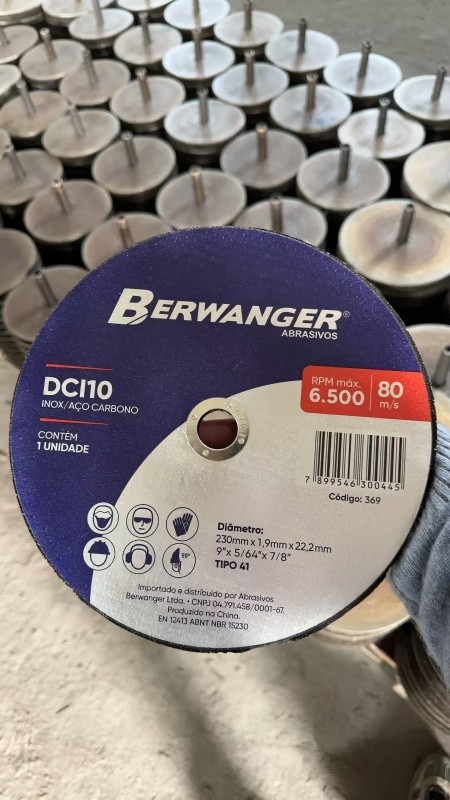
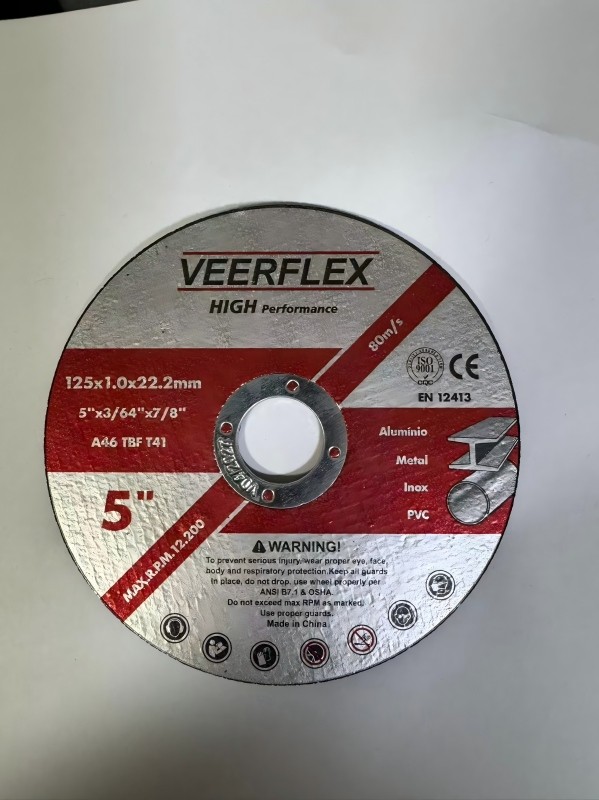
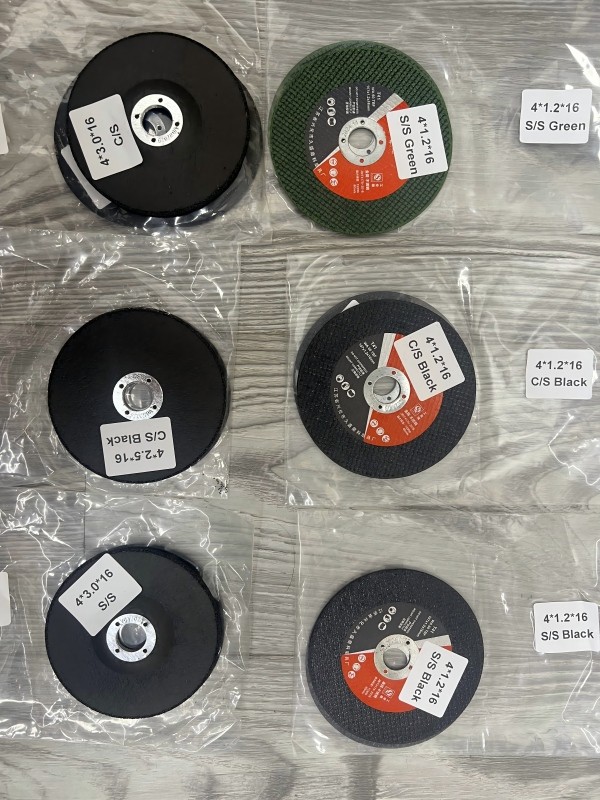
Cutting discs, also known as cut-off wheels, are specialized abrasive tools designed for rapid and precise cutting of various materials. Their core function is to separate or shape workpieces by means of high-speed rotation, relying on the abrasive particles bonded to the matrix to grind and cut the material surface. Unlike grinding discs, cutting discs are usually thinner in thickness, which reduces material waste during cutting and improves cutting accuracy. The key performance indicators of cutting discs include cutting speed, service life, cutting precision, and safety, which are mainly determined by the type of abrasive, bond material, matrix thickness, and production process.
The abrasive materials commonly used in cutting discs include aluminum oxide, silicon carbide, and diamond. Aluminum oxide cutting discs are suitable for cutting ferrous metals such as carbon steel and stainless steel, featuring good toughness and wear resistance. Silicon carbide cutting discs are mainly used for cutting non-ferrous metals like aluminum alloy and copper alloy, as well as non-metallic materials such as glass and ceramics. Diamond cutting discs, with high hardness and wear resistance, are ideal for cutting hard and brittle materials such as stone, concrete, and reinforced steel, and are widely used in construction and stone processing industries.
In terms of application scenarios, cutting discs cover a wide range of industries and are indispensable tools in daily production and maintenance. In the metal processing industry, cutting discs are used to cut steel plates, steel pipes, profiles, and other workpieces, which is a key link in the production of mechanical parts, hardware products, and steel structures. For example, in the manufacturing of auto parts, cutting discs are used to cut steel bars and pipes into specified lengths, laying the foundation for subsequent processing. In the construction and decoration industry, diamond cutting discs are widely used for cutting concrete walls, ceramic tiles, marble, and granite, meeting the needs of building demolition, renovation, and decoration. In addition, in the mechanical maintenance field, cutting discs are used to cut and remove damaged parts, such as cutting off rusted bolts and worn shafts, which is convenient for equipment maintenance and replacement.
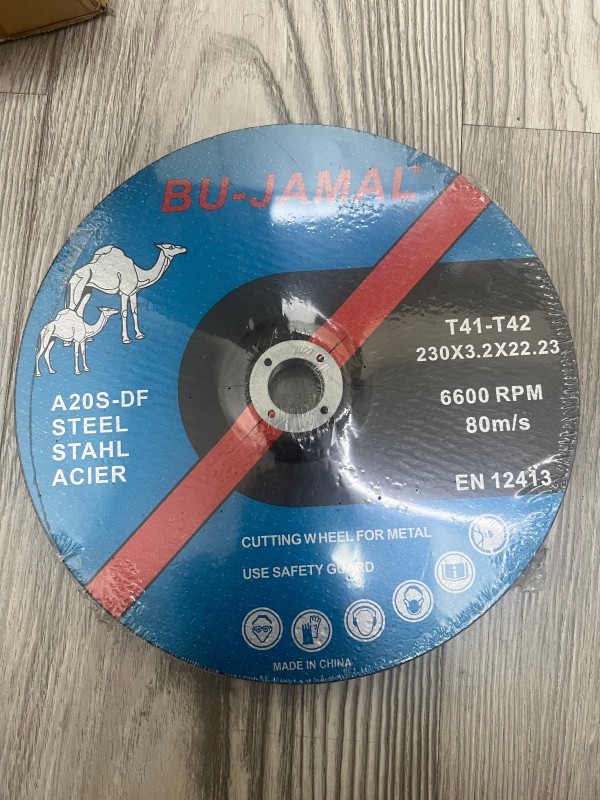
Grinding discs, also called grinding wheels, are abrasive tools used for surface grinding, polishing, and shaping of workpieces. Compared with cutting discs, grinding discs are thicker and have a larger working surface, which enables them to process larger areas of workpieces and achieve higher surface finish. The core function of grinding discs is to remove burrs, oxides, and excess materials on the workpiece surface through high-speed rotation, improve the flatness, smoothness, and dimensional accuracy of the workpiece, and lay the foundation for the final processing of the product.
The application scenarios of grinding discs are more focused on precision processing and surface treatment, and they are widely used in industries with high requirements for workpiece quality. In the precision machining industry, grinding discs are essential tools for the final processing of mechanical parts. For example, in the manufacturing of precision bearings, gears, and molds, grinding discs are used to grind the surface of the workpiece to achieve the required dimensional accuracy and surface finish, ensuring the performance and service life of the product. In the automotive manufacturing industry, grinding discs are used for grinding the engine block, cylinder head, and other key parts, improving the sealing performance and operating efficiency of the engine.
In the hardware and tool industry, grinding discs are used to polish the surface of hardware products such as knives, scissors, and wrenches, removing burrs and oxides, and enhancing the surface brightness and corrosion resistance of the products. In addition, in the aerospace industry, grinding discs are used for grinding precision components such as aircraft engine parts and aerospace structural parts, which requires extremely high grinding accuracy and surface quality to meet the strict requirements of aerospace equipment.
The performance of grinding discs is closely related to the type of abrasive, bond, and structure. Resin-bonded grinding discs have good elasticity and impact resistance, suitable for rough grinding and semi-finishing. Ceramic-bonded grinding discs have high hardness and wear resistance, suitable for precision grinding and high-speed grinding. Metal-bonded grinding discs, with strong bonding strength, are mainly used for grinding hard materials such as diamond and cubic boron nitride.
In summary, cutting discs and grinding discs, as two important types of abrasive wheels, complement each other in industrial production. Cutting discs focus on rapid and precise cutting, solving the problem of material separation and shaping; grinding discs focus on surface finishing and precision processing, improving the quality and performance of workpieces. With the continuous development of industrial manufacturing towards high efficiency, refinement, and greenization, the performance requirements of abrasive wheels are constantly improving. In the future, cutting discs and grinding discs will be further optimized in terms of material innovation, process improvement, and safety performance, providing more efficient and reliable solutions for global industrial production and promoting the high-quality development of the manufacturing industry.