Origin of Christmas and Spring Festival
- Share
- publisher
- Sun
- Issue Time
- Dec 5,2025
Summary
A Comparative Analysis of the Origins of Christmas and the Spring Festival
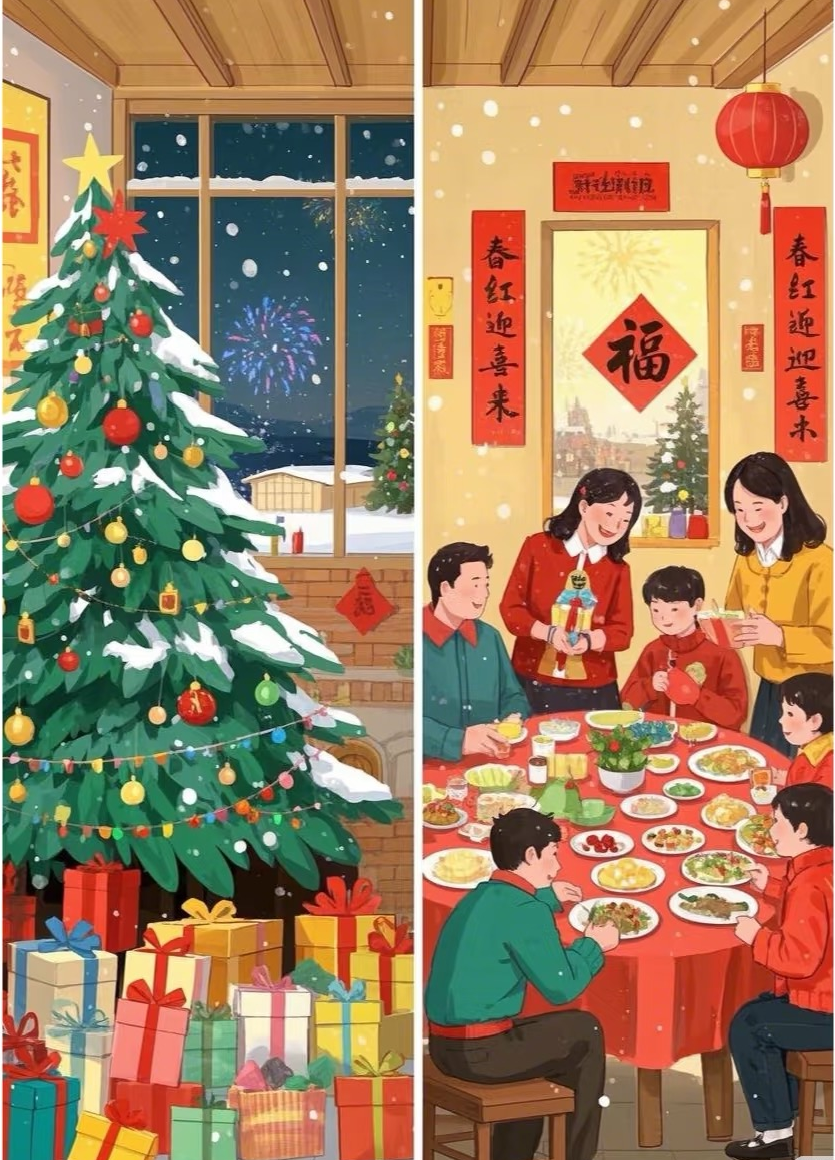
A Comparative Analysis of the Origins of Christmas and the Spring Festival
1. Historical and Cultural Roots
Christmas:
Originating in the Christian tradition, Christmas commemorates the birth of Jesus Christ, believed by Christians to be the Son of God. The date, December 25, was formalized in the 4th century by the Roman Church, aligning with pre-existing pagan winter solstice festivals like Saturnalia and Dies Natalis Solis Invicti (the birthday of the Unconquered Sun). This strategic alignment facilitated the spread of Christianity across Europe. Over time, customs such as gift-giving, caroling, and decorating evergreen trees—rooted in Germanic and Roman traditions—merged with the religious narrative, creating a holiday that blends spirituality and cultural heritage.
Spring Festival (Chinese New Year):
With origins dating back over 3,000 years to the Shang Dynasty, the Spring Festival emerged from agrarian rituals honoring deities and ancestors. It marks the end of winter and the beginning of spring, symbolizing renewal and prosperity. Central to its mythology is the legend of Nian, a beast vanquished by noise, fire, and the color red—traditions that evolved into fireworks, red lanterns, and door decorations. The festival also reflects Confucian values of family unity and filial piety, emphasizing reunion dinners, ancestral worship, and the exchange of red envelopes (hóngbāo). Governed by the lunar calendar, its timing varies annually between January 21 and February 20.
2. Symbolism and Themes
Christmas:
The holiday emphasizes themes of hope, redemption, and divine love through the Nativity story. Symbols like the Christmas star, manger, and Advent wreath carry religious significance, while secular icons such as Santa Claus and reindeer reflect commercialization and global cultural exchange. The emphasis on charity ("giving") and peace resonates universally, transcending its Christian roots.
Spring Festival:
Centered on renewal, luck, and familial harmony, the festival embodies the cyclical nature of life in Chinese philosophy. Symbols like the color red (warding off evil), dumplings (wealth), and fish (abundance) reflect aspirations for prosperity. The thorough cleaning of homes before the New Year symbolizes the old year’s burdens, while dragon dances and temple fairs highlight communal joy and cultural continuity.
3. Modern Evolution and Global Influence
Christmas:
While retaining religious importance for Christians, Christmas has become a global cultural phenomenon. Its secular traditions—decorations, markets, and gift exchanges—are embraced worldwide, often detached from theological context. In multicultural societies, it serves as a platform for interfaith dialogue and shared celebration.
Spring Festival:
Traditionally confined to East Asia, the Spring Festival has gained international recognition due to the Chinese diaspora. Cities like San Francisco and London now host parades and lion dances, while UNESCO recognized it as part of humanity’s intangible cultural heritage in 2016. Despite modernization, its core values of family, tradition, and renewal remain intact.
Conclusion
Both holidays, though rooted in distinct cultural and religious frameworks, share universal emphasis on light conquering darkness, community bonding, and optimism for the future. Christmas intertwines faith with ancient European customs, while the Spring Festival weaves mythology, agrarian cycles, and Confucian ethics into a tapestry of cultural resilience. Together, they exemplify humanity’s timeless quest for meaning and connection across diverse civilizations. 🎄🎆