Introduction to Tianjin Port, the Largest Port in China
- Share
- publisher
- Sun
- Issue Time
- Dec 15,2025
Summary
Location: Located in the Binhai New Area of Tianjin, the port comprises multiple zones, including the North Port, South Port, Dongjiang Free Trade Port Area, and Lingang Economic Zone. It spans a land area of approximately 130 square kilometers and a water area of 336 square kilometers.
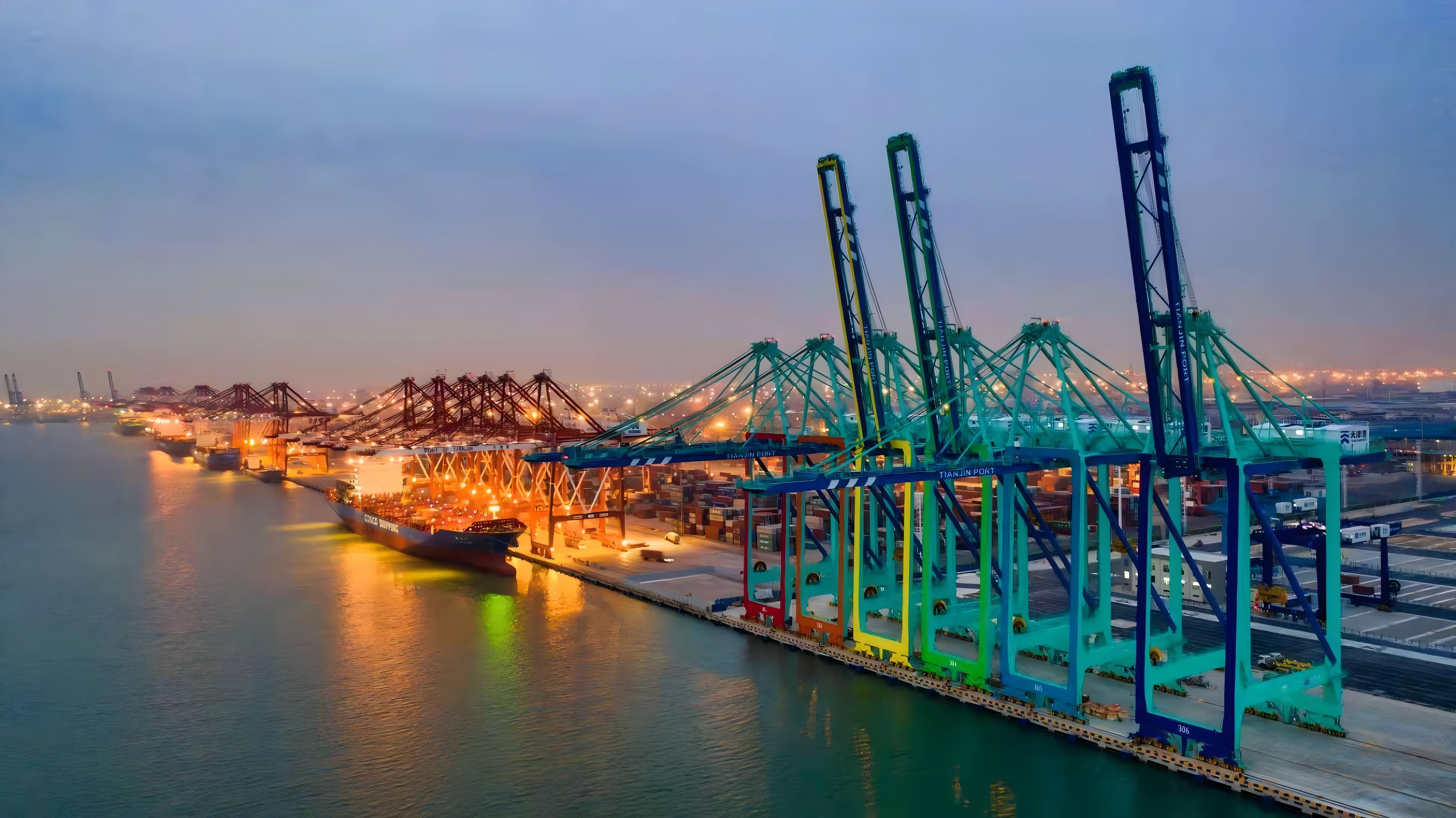
Introduction to Tianjin Port, the Largest Port in China
Tianjin Port, the largest comprehensive port in Northern China and a world-class artificial deep-water port, is situated at the western end of the Bohai Bay, where the Beijing-Tianjin-Hebei urban cluster and the Bohai Rim Economic Zone converge. Below is a detailed overview:
1. Geographic Location & Strategic Significance
Location: Located in the Binhai New Area of Tianjin, the port comprises multiple zones, including the North Port, South Port, Dongjiang Free Trade Port Area, and Lingang Economic Zone. It spans a land area of approximately 130 square kilometers and a water area of 336 square kilometers.
Strategic Role: As a critical hub for the coordinated development of the Beijing-Tianjin-Hebei region, Tianjin Port serves as a maritime-terrestrial nexus for the Belt and Road Initiative, connecting the China-Mongolia-Russia Economic Corridor. It supports the hinterlands of North and Northwest China while radiating influence across Northeast Asia and globally.
2. Infrastructure & Handling Capacity
Terminal Facilities: Equipped with specialized terminals for containers, crude oil, minerals, coal, and automobiles. Its automated container terminals rank among the world’s most efficient.
Navigation Channels: The main channel depth reaches -22 meters, allowing 24/7 access for 300,000-ton oil tankers and 200,000-ton container vessels.
Throughput: In 2022, cargo throughput exceeded 550 million tons, and container throughput surpassed 21 million TEUs (twenty-foot equivalent units), securing its position among the top 10 global ports.
3. Functional Advantages & Innovations
Multimodal Transport: Integrates rail, road, and pipeline networks for seamless sea-rail and land-sea intermodal transport, with over 500 annual China-Europe freight train departures.
Free Trade Zone: The Dongjiang Free Trade Port Area is a core international shipping hub, pioneering bonded warehousing, financial leasing, cross-border e-commerce, and trade facilitation.
Green & Smart Port: Implements shore power systems and new energy vehicles to build zero-carbon terminals. Leverages 5G and blockchain technology for intelligent management platforms.
4. Vision for the Future
Tianjin Port is accelerating its transformation into a world-class green, smart, and hub port, driving the dual-city development of “Jincheng” (Tianjin’s urban core) and “Bincheng” (Binhai New Area). It aims to fuel high-quality regional economic growth and enhance Northern China’s global connectivity.
In Summary: With unparalleled geographic advantages, robust capabilities, and relentless innovation, Tianjin Port stands as a strategic engine for national development and regional prosperity, showcasing China’s cutting-edge port infrastructure. 🚢🌏