EU CBAM Expansion Poses New Compliance Challenges for Chinese Exporters
- Share
- publisher
- Sun
- Issue Time
- Sep 17,2026
Summary
The EU is moving to expand its Carbon Border Adjustment Mechanism (CBAM) beyond steel, cement and aluminium to cover finished goods — including home appliances, hardware and photovoltaic products. For Chinese exporters, this means stricter carbon reporting, higher compliance costs, and potential customs delays without accurate product carbon data.
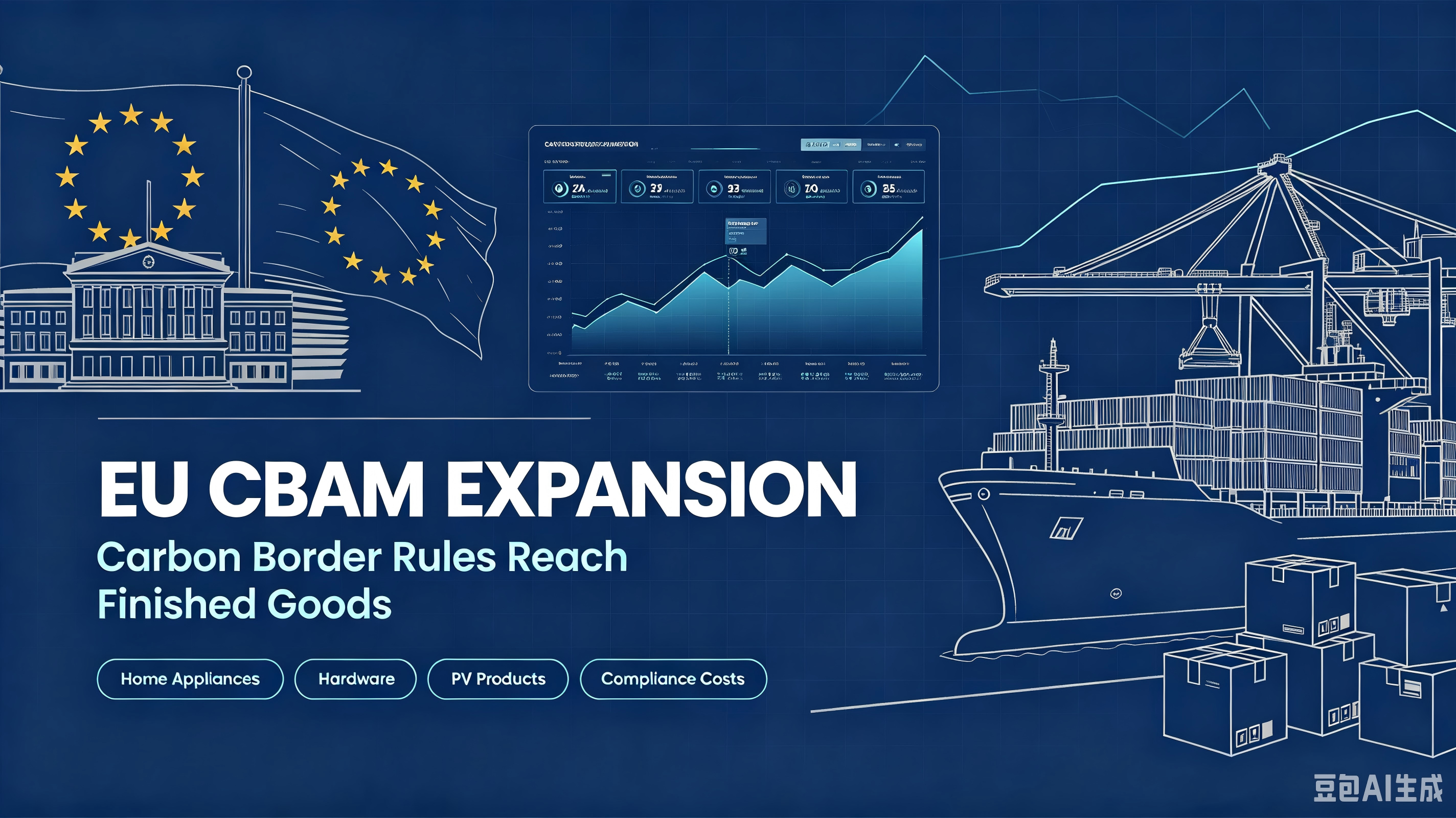
Sept 17, 2026 – The European Parliament has formally adopted its negotiation position to expand the EU Carbon Border Adjustment Mechanism (CBAM), extending carbon reporting and payment obligations beyond traditional raw materials to finished goods including home appliances, hardware and photovoltaic products.
Previously limited to sectors such as steel, cement, aluminium and fertilisers, CBAM will now cover more downstream manufactured imports shipped into the EU market. Stricter anti-circumvention rules are also introduced to strengthen carbon emission verification. Importers must submit full carbon footprint documentation and pay corresponding carbon levies; incomplete or false declarations may trigger heavy fines.
For Chinese exporters, especially manufacturers of hardware, construction fasteners and metal products, this expansion raises compliance costs. Companies without accurate product carbon data will face customs delays or extra carbon charges when selling to EU buyers.
Industry advisors recommend enterprises start carbon accounting as soon as possible, collect emission data across supply chains, and communicate actively with European customers. Diversifying overseas markets can also help reduce reliance on the EU market.
While CBAM aims to curb carbon leakage, it creates a new trade barrier for many export firms. Businesses need to balance product competitiveness with low-carbon transformation to maintain stable orders from Europe.